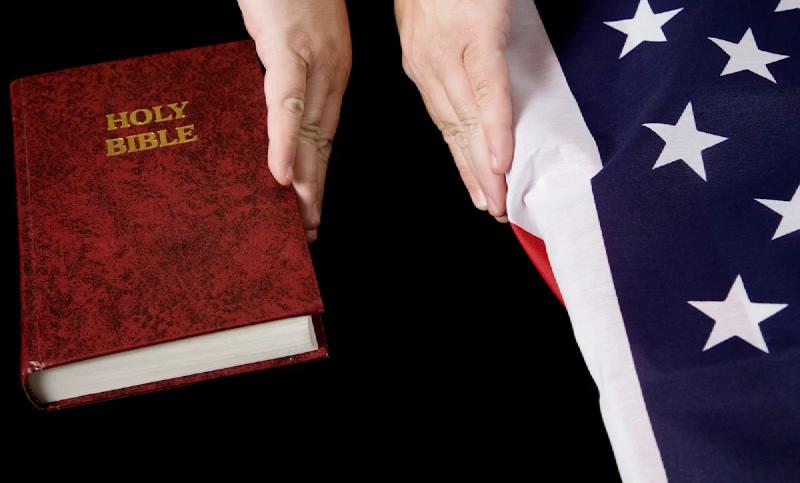
In this post I argue that public primary and secondary schools in the “united” states instill a religious worldview in their students that is isomorphic to that typically associated with parochial schools, or religious schools.
My Academic Background
- I went to preschool at a local highschool from about the age of 4.
- I went to the local public school K-12.
- I went to Sunday School at a local Methodist church most weeks from about grade 1 to about grade 10.
- I got a Bachelors of Science at a private Christian college. I entered as a Christian and graduated as an Atheist.
- I got a masters of Science from a large public university.
- I taught Physics and Computer Science at two separate private secular high schools for a total of 4 years.
- I taught Electrical Engineering to highschool students at a secular summer program run by a large progressive public university for 10 summers.
Parochial Schools
The parochial schools that I have the most familiarity with are Christian schools. I expect that the characteristics I will discuss here apply similarly to parochial schools of other religions.
In addition to teaching basic secular subjects like math, reading, spelling, and science, parochial schools strive to expose their students to a religious worldview. This means reading scriptural stories, studying church history, understanding theology. In Christian schools, children will read Bible stories, learn about the trinity and the ten commandments, and the famous church councils and creeds. They may learn about historical theological disputes. In Catholic schools they learn about confession and transubstantiation. These religious aspects of education are often considered of equal importance with secular education and in some cases are considered more important.
There will be cases where the religious tradition is sometimes in tension with the secular tradition, and sometimes even in direct conflict. Here are a few examples. The trinity: Religious education teaches that there is one God who is also three Gods. This is in direct conflict to the mathematical principal that 1 is not equal to 3. Mythology: A literal interpretation of the scriptural myths such as creation or flood will be in conflict with the evidence of natural science. Resurrection: The resurrection of Jesus Christ is a fundamental tenant of Christian belief, but science is very clear that nobody was coming back to life after three days being dead 2000 years ago. Even with modern medicine, a deceased body could not be resurrected after three days of decomposition and significant blood loss.
Good Parochial Schools
The best parochial schools will face these apparent contradictions head on, not shying away from the tension. They will explore the possibility that the creation myth be be simply wrong, or my be useful to teach us moral lessons while still being scientifically inaccurate, or may be an analogy that is roughly true, but not literally. They will consider that the flood may have only been localized and that Noah didn’t actually save all the biological life. They will consider that it may be an untrue narrative. They will consider that the Hebrews may have never been enslaved in Egypt, but ask what the story may mean today despite the historical inaccuracies. They will encourage students to embrace the dissonance, and discover the meaning for themselves. They will teach the fullness of geology, evolution and mathematics alongside their religious tradition despite the apparent conflict with the religious tradition, and embrace the mystery and complexity.
Bad Parochial Schools
The worst parochial school will teach religious dogmatism. If the bible says that pi = 3 then it must be so. They will teach that God literally created the earth in 6 24-hour days, fossil record be damned. They will teach that if God destroyed Sodom, then God must really hate fags. This is to say that they consider the religious narrative and tradition to be primary and anything and anyone that contradicts it to be wrong and evil. They will not engage in intellectual curiosity or critical thinking, but will rely on blond faith.
The Spectrum
Most Parochial school will fall somewhere between these two extremes.
I went to Calvin College, and in my opinion it was closer to the good end of the spectrum. To my surprise, the best, most intellectually honest departments, were the religion and philosophy departments. But there were plenty of dogmatists among the student body and even the faculty.
Public Schools
This brings me to public schools. Public schools in the “united” states don’t teach about the trinity or the flood. At least they didn’t when I was a kid. I understand in the more distant past they may have, and with Texas schools now displaying the ten commandments, they may be moving back in that direction. But I will focus on the more progressive public schools, like the one I attended in Northern Ohio in the ’90s and early ’00s (pronounced “naughties”).
You’ve probably heard the adage that there is no suck thing as a free lunch. But public schools aim to offer a nearly free education (and sometimes feature a free literal lunch too). So what is the catch?
These Public schools systematically expose their students to a civic religion. They don’t teach about the Genesis creation myth, but they teach about the American Revolution. They don’t teach the importance of taking communion, but they teach the importance of voting. They don’t teach that God is real or that Jesus loves you, but they teach that the Government is real and has your best interest at heart. They teach that laws and morals are the same thing and should be followed. Students of these schools may not be taught to think critically about why or how the government exists. They may not fully understand that it is a human creation - in the case of the “united” states, a relatively recent creation. Students may not realize that they are fundamentally wild animals who have the ability to choose to believe in the government or not.
The Best Schools IMO
Growing up I was a proud public schooler. I thought that private schools were for richy-riches who were too good for the public schools. In college I got my first glimpse of the fact that private schoolers typically had much more rigorous academic preparation that I had. But at this time, being in a Christian school, I still thought most of them were dogmatic and deficient in critical thinking, because most of them came from religious private schools. Later in life I taught at secular private schools and saw that they offer the rigorous academics without the religious indoctrination. The valid point about richy-riches notwithstanding, I now consider private secular schools the best out-of-home education available to most students in the “united” states.